
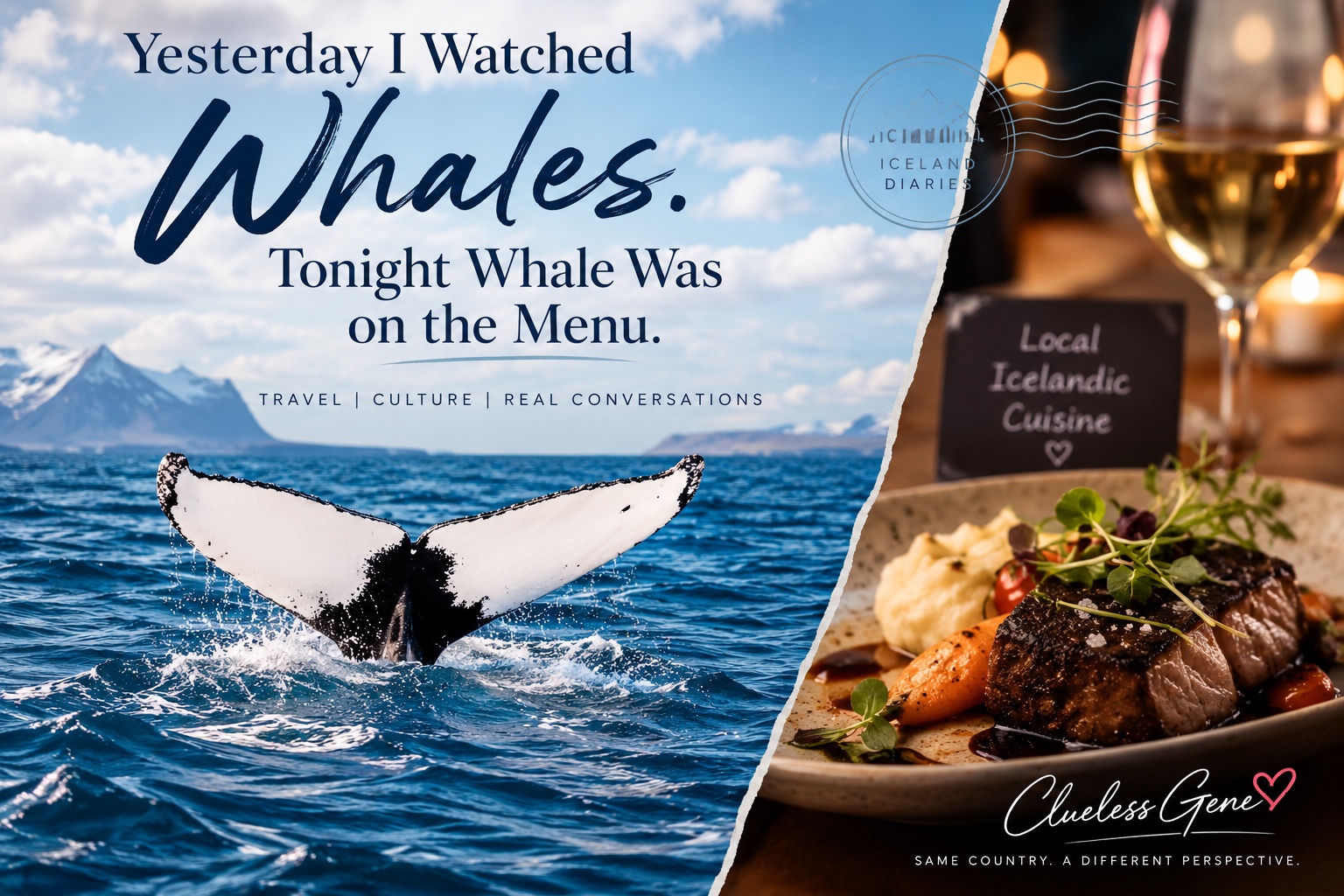
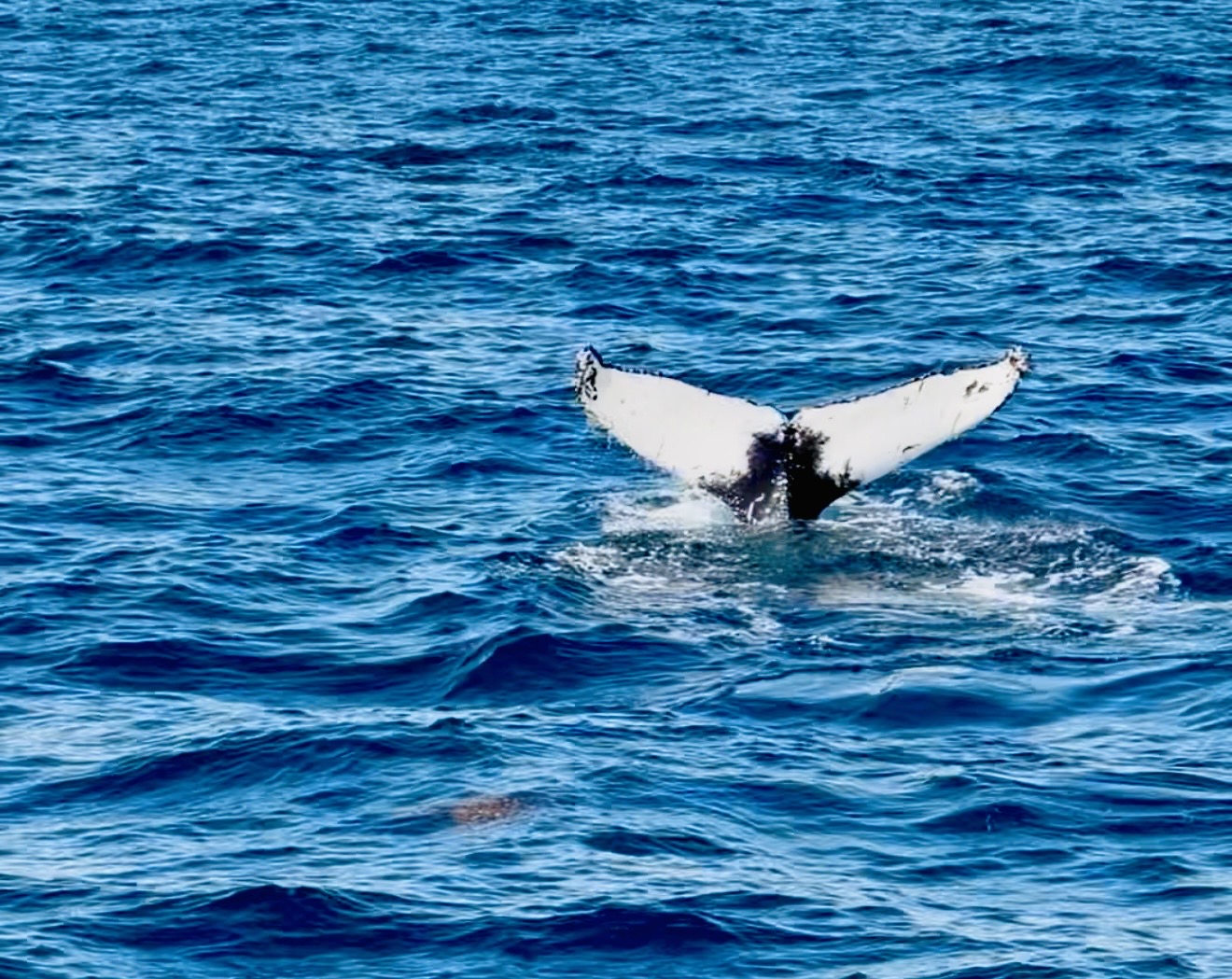
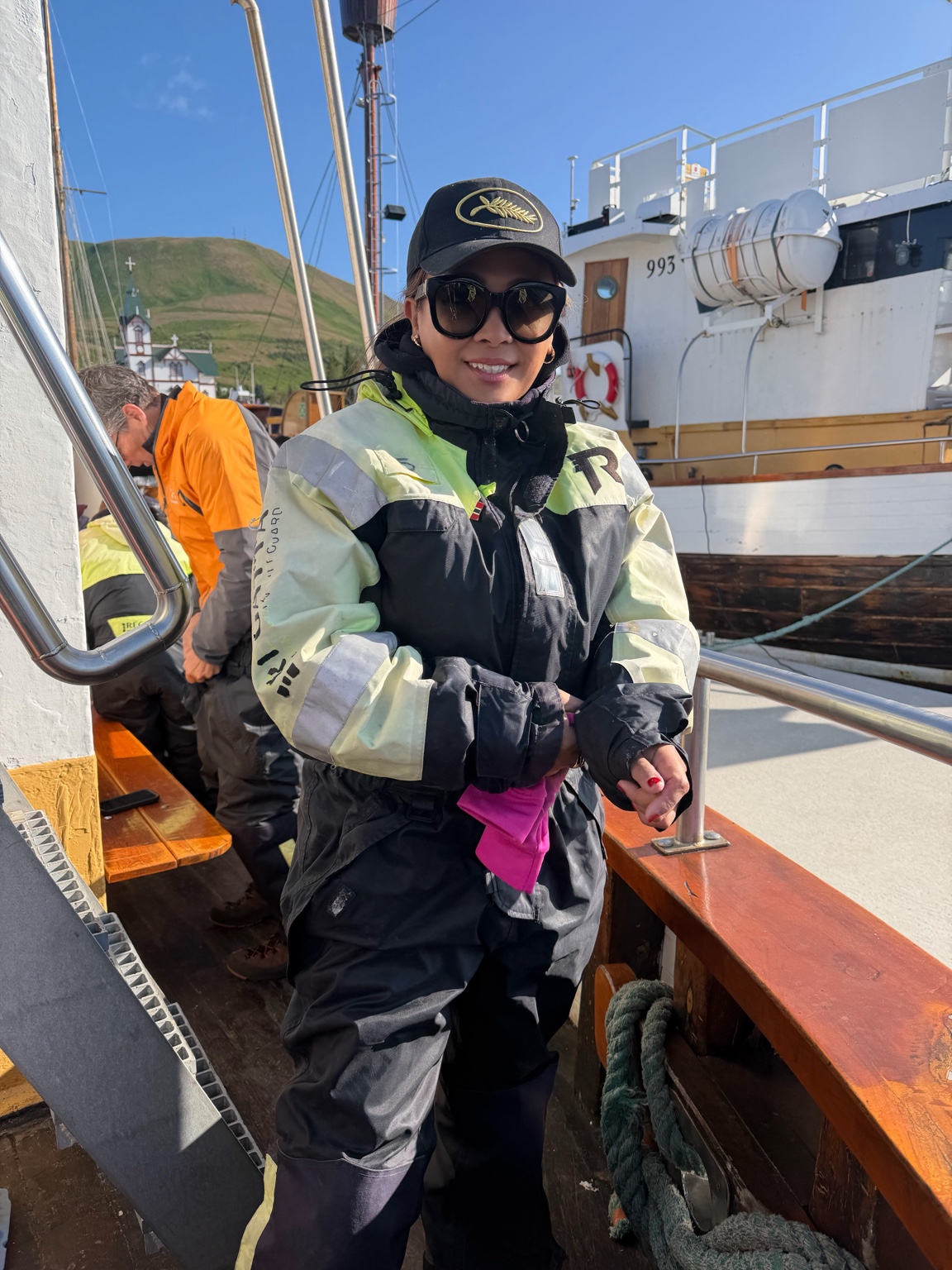
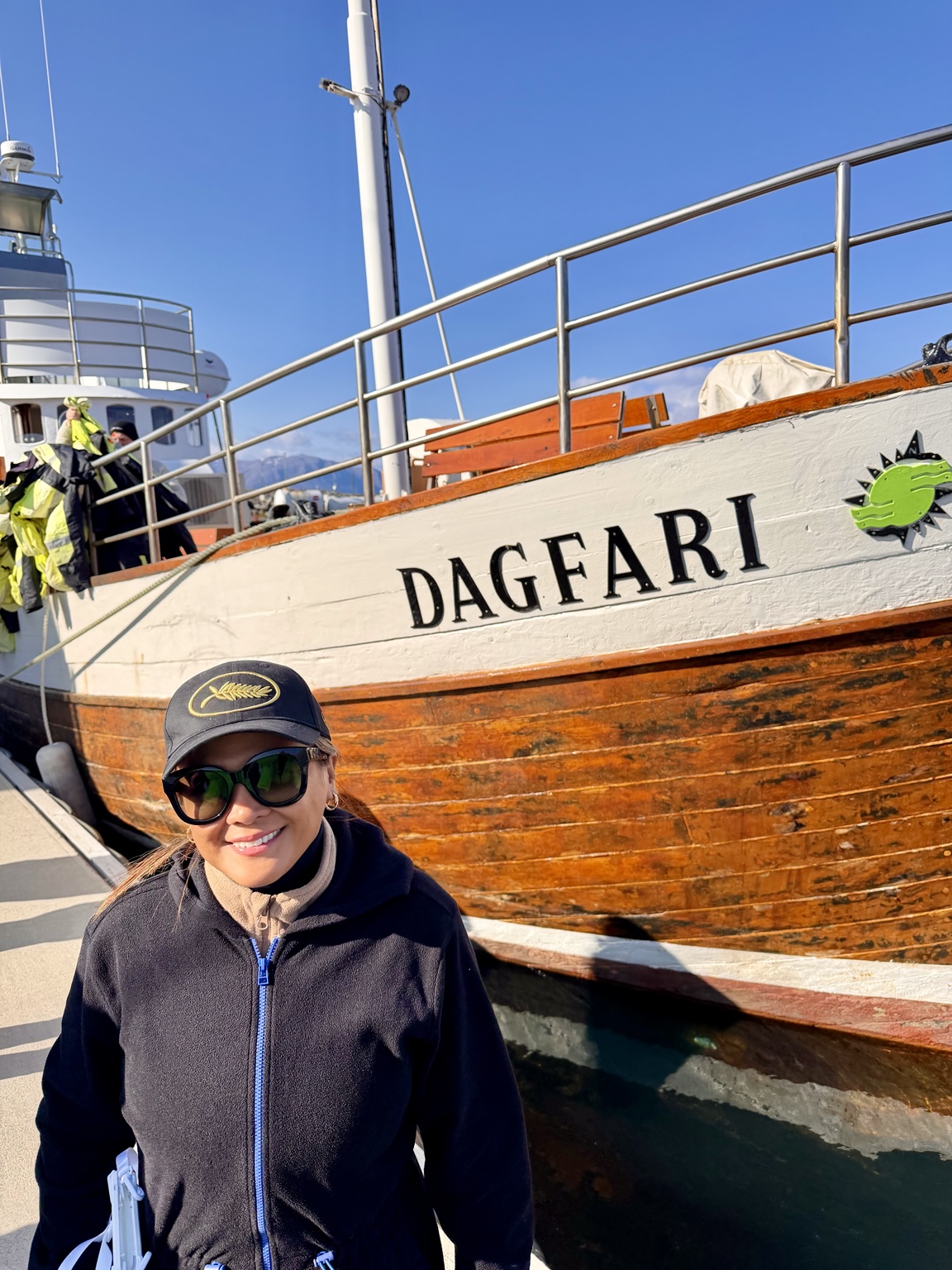
Yesterday, I went whale watching in Húsavík.
We had driven almost four hours to get there after our original trip was rescheduled because of the weather.
And we saw humpback whales. 🐋
The next day, I found myself thinking about whether Iceland should still be hunting whales.
Not exactly where I expected this road trip to take me. 😂
It started with a question in a museum
There was a question asking visitors what they thought about whaling and whether it should continue.
And I genuinely didn’t know what answer I would give.
Before coming to Iceland, I had always associated whaling here with tradition.
And if I’m being fair, that affected how I looked at it.
I’m uncomfortable with outsiders arriving in another country and immediately deciding that something the local population has done for generations is wrong simply because we wouldn’t do it.
Iceland certainly has a long history involving whales.
But the more I learned, the more I realised that today’s industrial commercial hunt for large fin whales isn’t quite the simple centuries-old food tradition I had imagined.
Then we went for dinner.
And suddenly there was whale on our table
We ordered a local charcuterie platter.
And there it was.
Fin whale.
I didn’t eat it.
My partner tried it.
His verdict?
“It tastes like smoked beef fillet.”
Yesterday we’d paid to go out on a boat and watch humpback whales.
Tonight, completely unintentionally, whale had appeared on our dinner table.
And that’s when I started asking questions.
Who actually eats all this whale?
This is where my business brain took over.
Who buys it?
How many whales are actually hunted?
How many people depend on the industry?
Does it even make money?
The answers weren’t quite what I expected.
An economic assessment commissioned by Iceland’s Ministry in 2023 concluded that whaling’s direct effect on the wider Icelandic economy was small. It also found that the whaling operation had not been profitable over the preceding decade.
Japan has historically been an important destination for Icelandic fin-whale products, but whale-meat consumption there has fallen dramatically—from its post-war peak to a tiny share of present-day meat consumption. Associated Press reported the decline and the industry’s attempts to revive demand.
And Iceland’s commercial fin-whaling industry today is tiny compared with what I had imagined. One company holds the current commercial licence.
So then I started wondering:
What exactly are we trying to preserve?
But I don’t think Iceland should be singled out either
This is probably where I won’t fit comfortably into either side of the debate.
Would I eat whale?
No.
Do I therefore think I should decide that nobody else can eat it?
Also no.
And if the objective is protecting whales, I’d like to look at the whole picture.
Whales aren’t only killed deliberately.
They become entangled in fishing gear.
They’re struck by ships.
Some survive. Some don’t. And many interactions are difficult to document.
A peer-reviewed study of 379 humpback whales photographed around Iceland found that at least 24.8% showed evidence of previous entanglement in fishing gear.
That does not mean 24.8% died. In fact, these were whales that survived long enough to be photographed.
But it does tell us something important: human interaction with whales extends far beyond whaling.
And researchers still don’t have a reliable number for how many large whales ultimately die from those interactions.
Meanwhile, deliberate whaling is very easy to count.
We know those 80 exist.
But if we’re genuinely trying to protect whales, I also want to know how many are being killed or seriously injured through fishing gear and shipping—not only around Iceland, but around the world.
Whales don’t recognise national borders.
So why should responsibility for protecting them stop at one?
Then I realised there was another way of looking at it
Yesterday, I was one of the people paying money to see whales alive.
And there are a lot of us.
A 2023 peer-reviewed study of Iceland’s whale-watching industry reported that around 364,000 people went whale watching in Iceland in 2019.
And those tourists don’t only pay for the boat.
They stay in hotels.
They eat in restaurants.
They buy fuel.
They rent cars.
They shop.
They travel around Iceland.
We drove almost four hours because we wanted to go whale watching in Húsavík.
The economic value of that trip certainly wasn’t limited to what we paid the whale-watching company.
And then something occurred to me.
Maybe the more profitable whale is the one you don’t catch.
A living whale can be seen today.
Another boat can see it tomorrow.
More tourists can potentially see it next season.
The same whale can generate tourism income repeatedly.
A hunted whale generates its economic value once.
That doesn’t automatically mean commercial whaling should be banned.
But from a purely business point of view, it’s an interesting comparison.
Especially when the market for whale meat is shrinking while people are willing to travel across Iceland and pay money simply for the possibility of seeing one alive.
So should Iceland stop whaling?
I still don’t know if I would tick YES or NO on that museum question.
And actually, I’m beginning to think it’s the wrong question.
I don’t want to eat whale.
I understand why somebody else might.
I don’t think Iceland should be singled out as *the* whale problem while fishing vessels and commercial ships operate across oceans around the world.
If we’re serious about protecting whales, then I’d rather look at the entire picture: commercial hunting, fishing-gear entanglements, ship strikes, population levels and sustainability.
And I’d make that an international conversation.
At the same time, Iceland’s own debate is moving. The government has said it intends to bring a bill to parliament in February 2027 to update the whaling law, with a permanent ban among the options being considered. That is a proposal—not yet law.
But there’s another part of this that is much simpler for me.
Business.
If people want a product, the population can sustainably support the activity, the law allows it and somebody can make a viable business from it, then that’s a discussion Iceland has to have.
But if customers are disappearing and the business itself no longer makes financial sense, why keep fighting to preserve it?
Perhaps we don’t need an endless ideological argument.
Maybe economics eventually makes the decision.
I went into that museum thinking whaling was simply an Icelandic tradition.
I came out unsure.
Then whale unexpectedly appeared on our charcuterie platter.
I started asking questions.
And after looking at both sides, I still haven’t become pro-whaling.
I haven’t become an anti-whaling campaigner either.
I just think the question is much bigger than “Should Iceland hunt whales?”
And perhaps, from a business perspective, much simpler.
Maybe the more profitable whale is the one you don’t catch.
Because whaling is ultimately a business too.
And like any other business:
**No market. No money. Move on.**
And me? I’m sticking to whale watching. 😂
---
*Figures and policy status checked on 13 September 2026. Catch totals can change during the season.*