
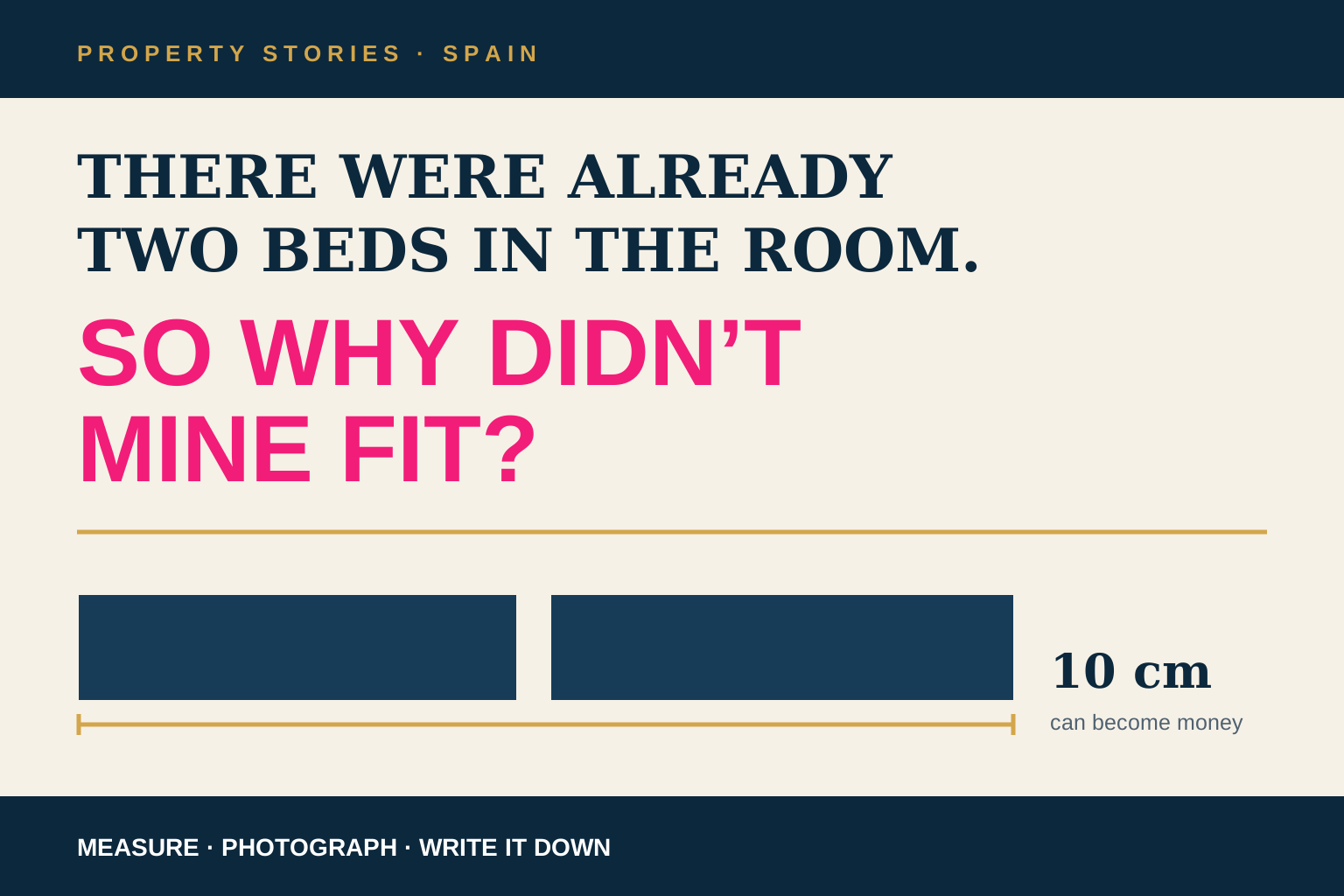
When I viewed my apartment in Spain, one bedroom already had two single beds in it.
And there was plenty of room to walk around them.
Perfect.
I was planning to rent the apartment out and wanted two single beds there anyway. I could see with my own eyes that they fitted comfortably.
I also genuinely liked the way the apartment was furnished. It had a Spanish feel, and that was part of its charm. One reason I didn’t mind buying what was supposed to be a furnished property was that I thought I could keep some of those pieces, preserve some of the character and save myself some money.
After completion, most of the furniture I had seen during my viewings had been removed. Some of the accent pieces were exactly the things I would happily have kept.
The beds were different. Replacing the beds and mattresses was an obvious hygiene decision for me, particularly because I was furnishing the apartment as a rental.
So I bought two new single beds.
They fitted.
Except suddenly there was barely any space to move.
What?
I had walked around two beds in exactly the same bedroom before.
The walls hadn’t moved.
The beds had.
This wasn’t my first time furnishing a home
I think this was around the fifth home I had furnished—which is probably precisely why I didn’t think twice about it.
I already knew the European furniture dimensions I was accustomed to. At home, our bed is 200 cm long because my partner is tall.
For the rental, I bought perfectly normal 190 cm-long beds. Not the 200 cm length we use at home. Not enormous beds. Just 190 cm.
And even those completely changed the usable space in the room.
This was simply my first time furnishing a property in Spain.
I hadn’t measured the original beds, so I cannot now claim their exact dimensions. But the layout suddenly made sense if they had been shorter—possibly 180 cm rather than 190 cm.
And the fact that I had never measured them became the real lesson.
Then I went down a Spanish bed-size rabbit hole
What started as “Why don’t my beds fit like the old ones?” became genuinely interesting.
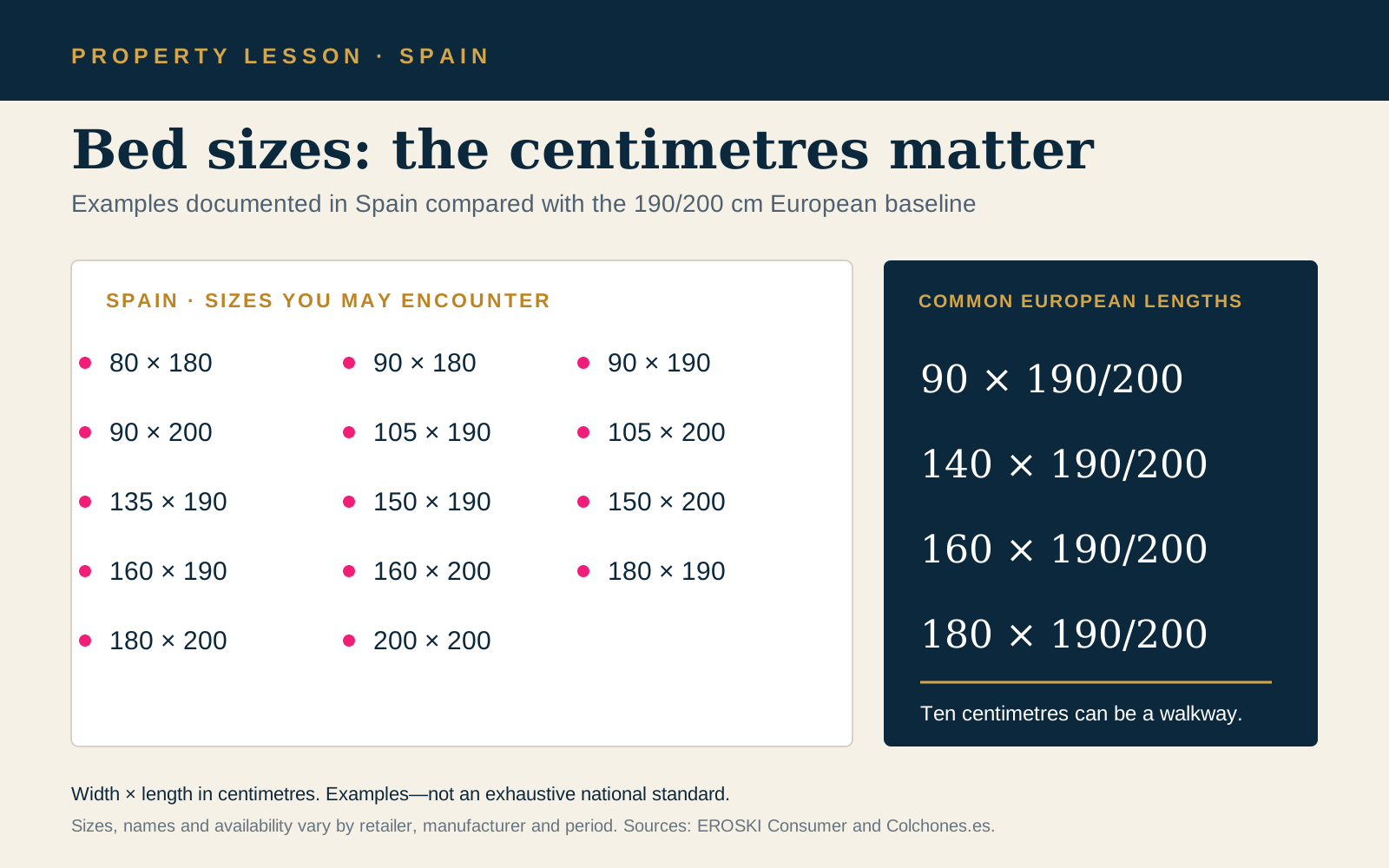
Spain has plenty of the modern bed lengths we are familiar with today, including 190 and 200 cm. But it also has dimensions I wasn’t accustomed to using.
EROSKI Consumer’s guide to bed dimensions, for example, lists 90 × 190 cm as a standard Spanish single while also documenting 180 cm and 200 cm lengths. It includes other widths and combinations too, and explains that bed dimensions vary between countries because of custom, average height and other factors.
The difference that mattered most in my bedroom wasn’t dramatic on paper.
180 cm versus 190 cm.
Ten centimetres.
But take ten centimetres out of the walkway between a bed and a cupboard and suddenly ten centimetres feels enormous. The outer bed frame can also be larger than the mattress, so I now measure both.
The practical lesson was not “Spanish beds are small.” That would be too simplistic.
It was this:
“Single”, “double”, “king” and “standard” are labels. Measurements are facts.
Now I care about the actual centimetres.
Then the history became even more interesting
My apartment dates from the early 1980s, so I started wondering whether the older furniture was simply part of the period.
That’s when I learned something I genuinely hadn’t known.
Research reported by Spain’s CSIC, based on Spain’s National Health Survey, found that Spaniards born in 1982 were on average around 10 cm taller than those born in 1910. The approximate averages rose from 166 to 177 cm for men and from 155 to 162 cm for women.
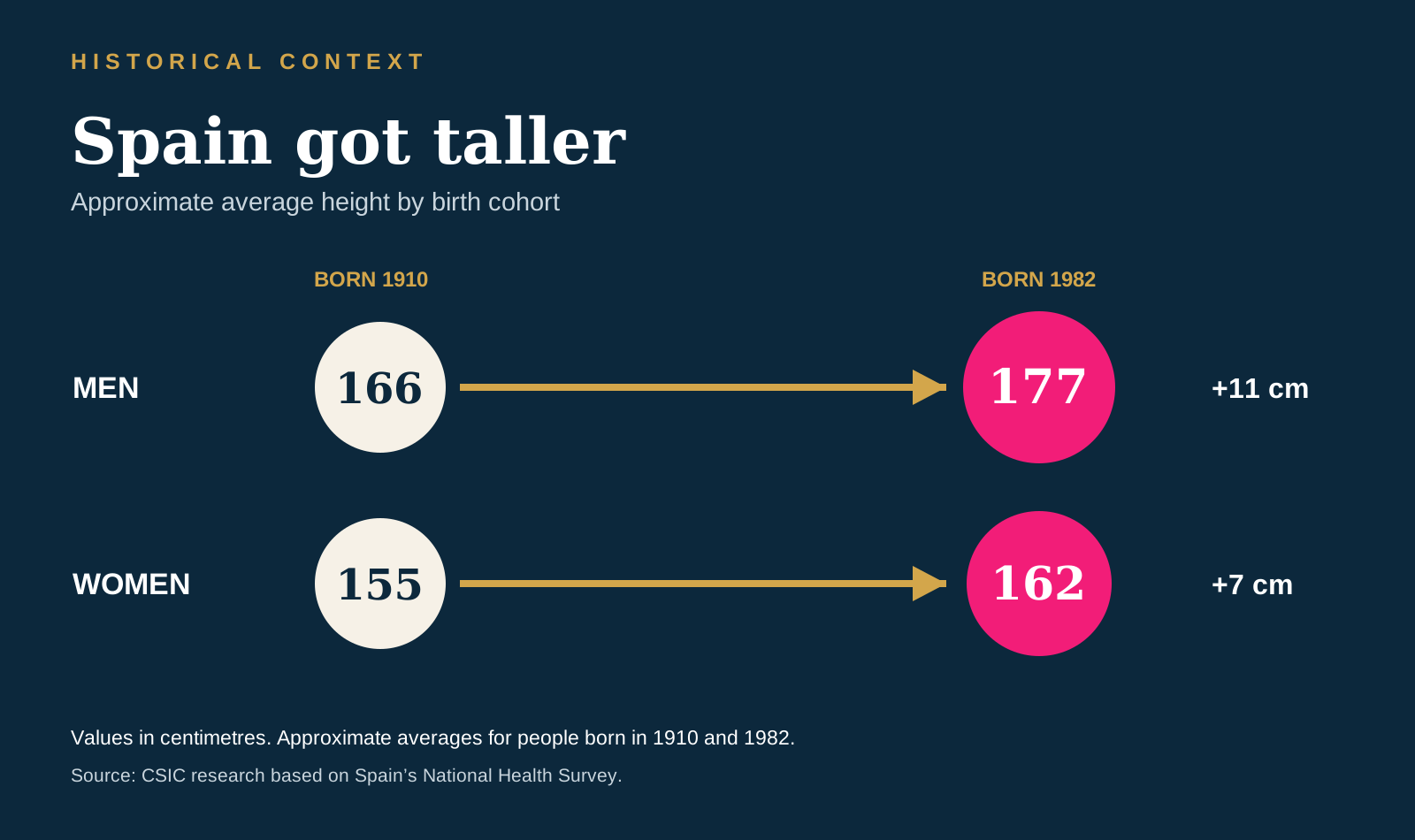
CSIC connects that long-term change with improvements in living conditions, nutrition, sanitation and wider socioeconomic development.
A Spanish mattress specialist, Colchones.es, also explains that the standard mattress length moved over time from 180 cm to 190 cm, with 200 cm now also considered standard as average sleeper height increased. Its bed-base guide makes the same historical point.
That does not prove the exact age or size of the beds I saw—I never measured them. But it does make a shorter older bed in an early-1980s apartment entirely plausible.
Different generation. Different furniture. Same walls.
And actually, the old furniture worked
That’s the part I don’t want to lose in this story.
I liked the original furniture. I wasn’t looking at it thinking it was strange, old or ridiculously small. Quite the opposite: some of it gave the apartment exactly the Spanish character I liked, and I would have kept some of those accent pieces if they had still been there.
From a practical point of view, the furniture also worked beautifully with the rooms.
If I were furnishing a home purely for myself and an 180 cm bed comfortably fitted me, why would I automatically give another 20 cm of a small bedroom to a mattress I didn’t need?
I’d take the walking space.
You can change the furniture. You can’t change the walls.
But I was furnishing for today’s rental market
My needs were different.
I wasn’t furnishing the bedroom around my own height or the previous owners’ needs. I was furnishing a rental for guests and tenants who could come from anywhere.
So I wanted modern beds that would comfortably accommodate a broad range of people.
The 190 cm beds stayed.
Something else had to shrink.
The cupboards lost. 😂
I chose thinner, shallower cupboards so I could recover some of that walking space.
And that is where what looked like a tiny bed-size issue became a property-cost issue too.
Standard furniture is generally easier to find and cheaper. If a room needs an unusually shallow cupboard, a less-common dimension or eventually a customised piece, the options narrow and the cost can rise.
A few centimetres can become money.
That’s why I now bring my own measuring tape
This experience changed the way I view property.
Now, if I’m seriously considering somewhere, I bring a measuring tape and take my own measurements.
I don’t just ask whether two beds fit. I check:
- the usable wall-to-wall dimensions
- the length and width of the mattress I actually intend to buy
- the outer dimensions of the bed frame
- the depth of the cupboards
- the remaining walking space
- whether doors and cupboard doors can open properly
- where sockets, radiators and fixed fittings sit
- who will actually sleep in the room
Then I choose the mattress size first and plan the frame and storage around it.
Maybe a shallower cupboard solves the problem. Maybe something needs customising. Maybe the room simply isn’t as useful for my intended rental as it first appeared.
None of those automatically makes it a bad property.
But they can change what I’ll need to spend.
And I’d rather discover that with a measuring tape in my hand than when two new beds are already sitting in the room.
This is exactly the kind of lesson behind my Property Viewing Companion
Not because there’s a box saying:
CHECK FOR SHORT SPANISH BEDS. 😂
There isn’t.
It’s because experiences like this changed the way I view property.
Measure. Photograph. Write things down.
Record what you’re actually looking at rather than relying on what you assume is standard—or what you think you’ll remember later.
Those small lessons accumulated through buying, renovating and furnishing property and eventually became part of the thinking behind my Property Viewing Companion in the Spain Property Buyer Toolkit.
Because due diligence isn’t only about finding the enormous legal or structural problem.
Sometimes it’s noticing that something perfectly ordinary isn’t the size you assumed it was.
And that can cost money too.
So now my property-viewing essentials include:
Phone. Photos. Questions. Measuring tape.
Apparently this is who I’ve become.
After furnishing around five homes, my first one in Spain taught me something I somehow hadn’t needed to learn before:
“I can see two beds” is not a measurement. 😂
— Gene | Clueless Gene
Buying property abroad, one unexpected lesson at a time.