
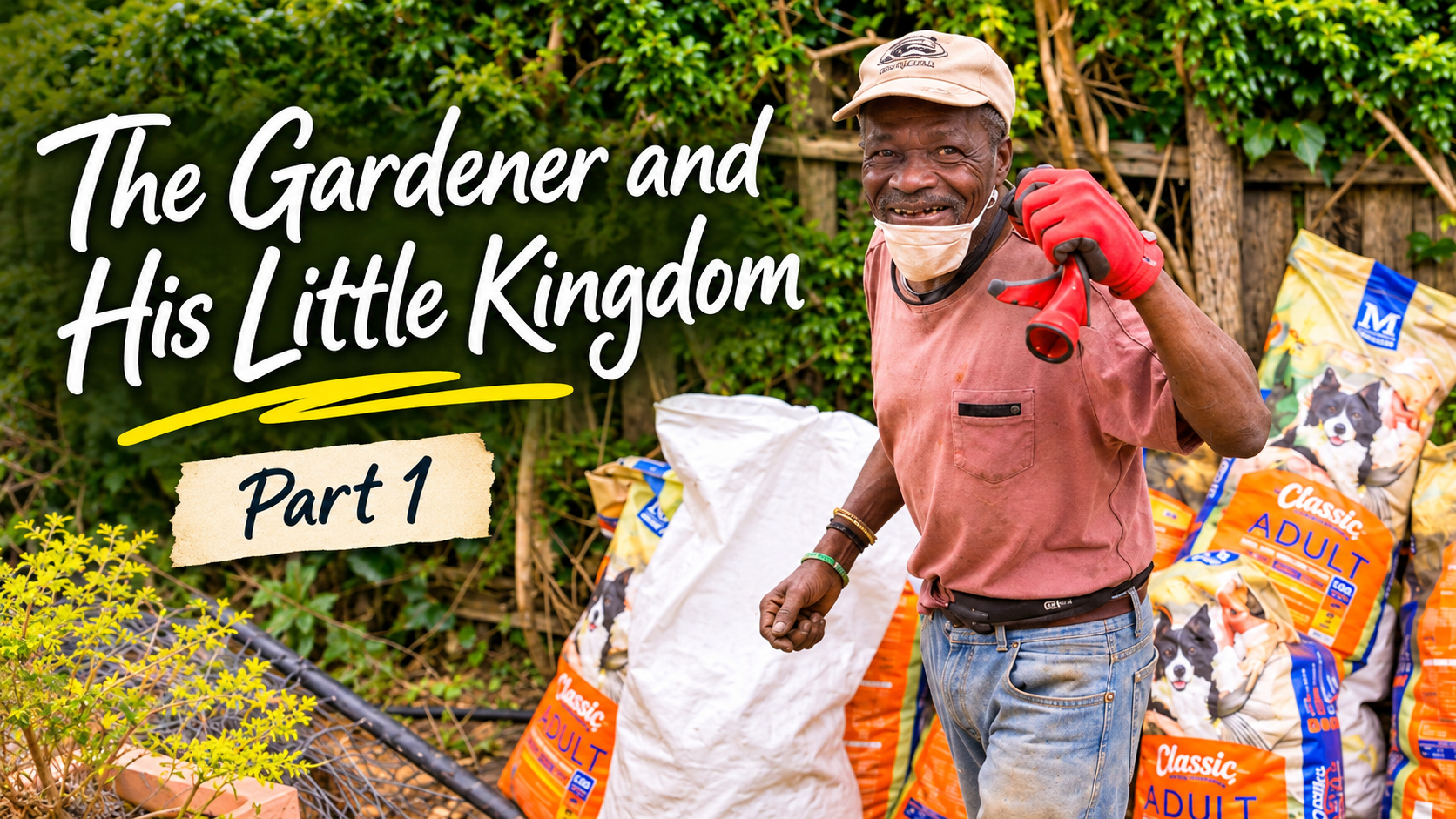
How well do we really know someone who has been part of our lives for decades?
Lungile was 61 when he died on 13 October 2026.
For more than 30 years, he had worked at my partner’s family home in Somerset West, South Africa. I knew him for about 15 of those years.

And I should probably confess something.
He wasn’t a qualified gardener, and we clearly had different ideas about gardening. 😂
The gardener who loved cutting everything
Lungile’s speciality was trimming.
If something grew, he cut it, whether it needed cutting or not.
About two years ago, I bought fertiliser for our Bird of Paradise plants because I wanted to encourage them to flower.
I imagined returning to beautiful orange blooms.
Instead, Lungile had trimmed everything down.
I couldn’t believe it.
But I suppose, as far as he was concerned, the garden looked tidy. Job done.
I wanted flowers. Lungile wanted everything cut back.
And yet, move one of his garden stones, and he would notice immediately.
Apparently, the stones were sacred. The flowers were negotiable. 🙈
You always knew when he arrived
Lungile brought his own radio to work.
Loud music announced his arrival, and when he left, the radio went with him, still playing.
Then there was his kettle.
His old electric kettle had broken, so I bought him a new one for his tea.
But he wasn’t ready to throw the old one away. He wanted to repair it.
We bought a replacement fuse and had the electrician working on the house check the kettle repair. We certainly didn’t want an electrical fire in his shack over a kettle.
I think Lungile liked fixing things with his hands. They didn’t necessarily have to look beautiful, as long as they worked.
He had his own ideas about how things should work.
The crosses around the property
While my partner’s mother, Inge, was still alive, Lungile began putting crosses around the property.
Not just around the house. Around the entire property.
There was even a particularly prominent one at the entrance gate. 😂
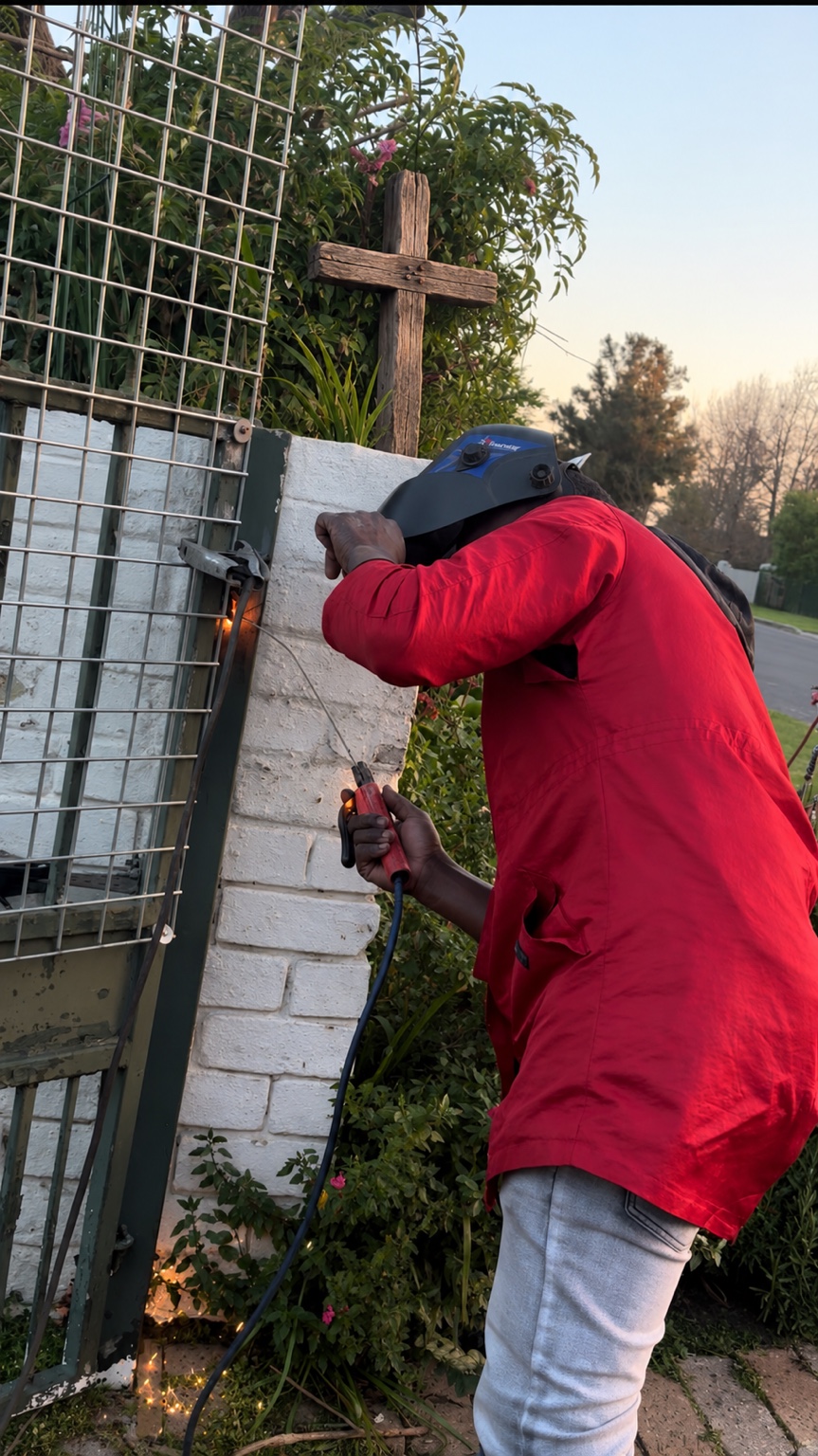
There had been concerns about witchcraft, and Lungile apparently believed the crosses offered protection.
My partner thinks he may also have been trying to protect Inge.
And perhaps he was.
She had been his employer for more than 30 years, and we knew how much she meant to him.
What I find particularly funny is that nobody ever removed the crosses.
They simply became part of the property.
Lungile had apparently appointed himself the property’s unofficial protector.
And nobody challenged his security arrangements.
The stories we struggled to understand
Lungile spoke mostly Xhosa, and his English was limited.
We managed everyday conversations, but when he wanted to explain something complicated, it wasn’t always easy.
After so many years of knowing him, we wanted to learn more about Lungile himself: his life, his family and where he came from.
So we hired a Xhosa-speaking woman to translate, giving us a chance to sit down and have a conversation beyond the everyday exchanges in the garden.
Even that was an adventure.
Sometimes she seemed so surprised by what Lungile was saying that she’d react before telling us what he’d actually said.
And we’re sitting there wondering what on earth was going on.
One story involved a caretaker at the house. According to Lungile, she had asked him to clean her own home. He expected to be paid, but said he hadn’t received the money. He also told us she had been speaking badly about him.
We were hearing Lungile’s version of events, through a translator. Trying to understand exactly what had happened wasn’t always straightforward. Even our Xhosa-speaking translator, who understood the local context far better than I did, was astonished by what he was telling us.
It made me realise how little we sometimes know about people we see regularly.
When we asked about Inge
Inge died on 27 January 2024.
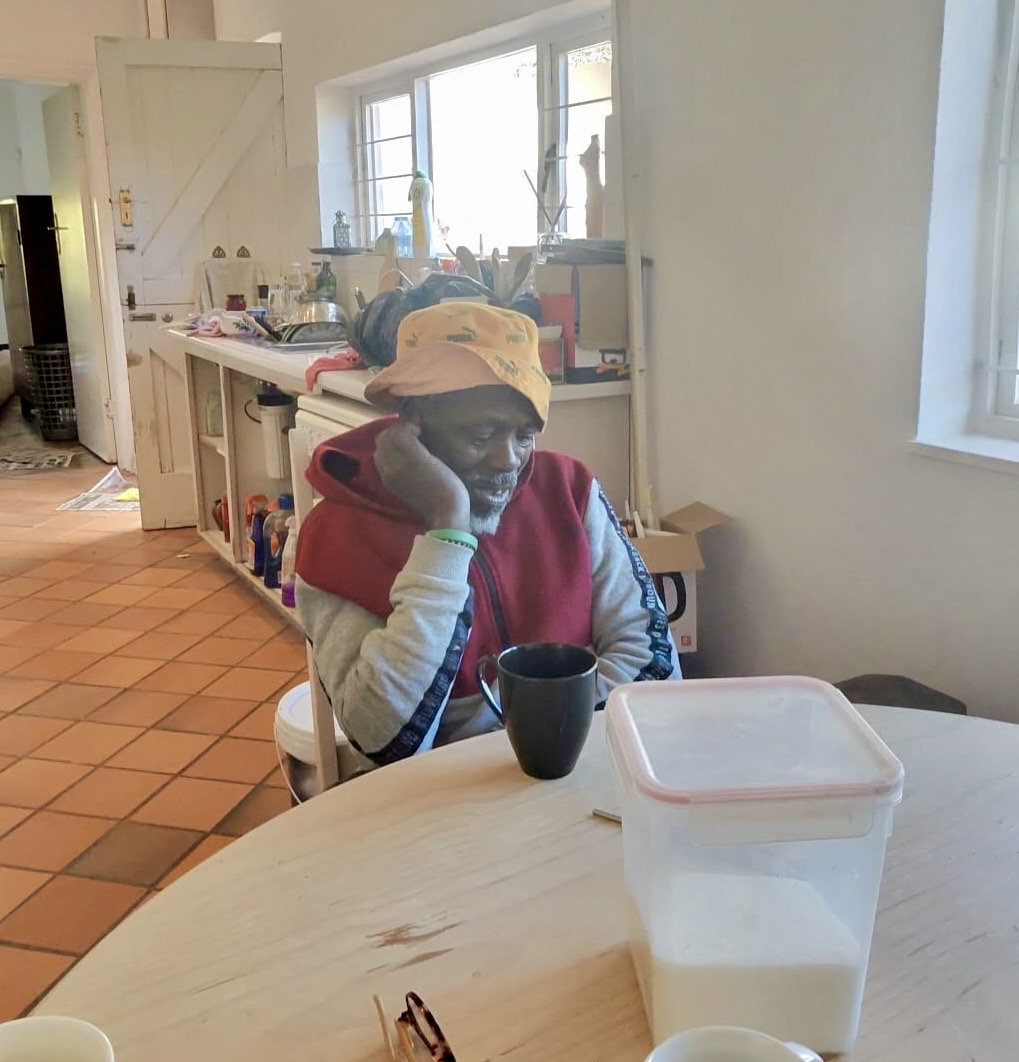
One day, when we asked him about Inge, he began to cry.
I hadn’t expected that.
For all the conversations we’d struggled through, this was one moment that needed no explanation.
We didn’t need a translator.
I still remember his face.
Why we kept Lungile
After her death, there was a lot to sort out.
We had to let the caretakers and maid go. There were also eleven dogs that needed new homes, and when we found people to take them, we gave away their beds, toys, bowls and remaining food as well.
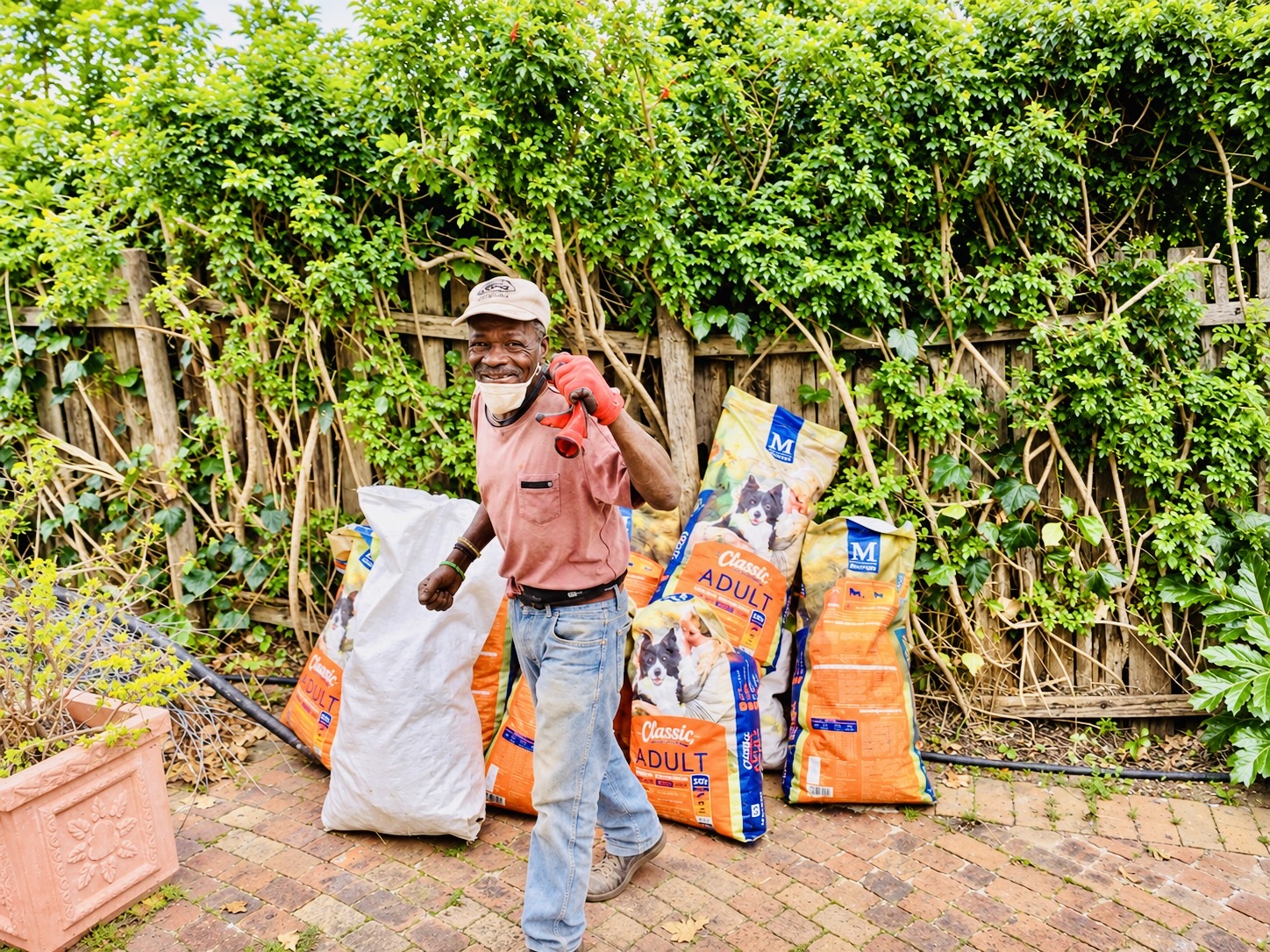
The house was changing, and so was everyone’s life around it.
Of all the people who had worked there, Lungile was the only one we kept.
We didn’t keep him for his gardening skills. We kept him because we liked him, and we trusted him.
We saw no reason to stop employing him simply because Inge was no longer there.
He was 58 when Inge died and would turn 60 in May 2025. He had already been talking about retirement. Our plan was to keep him employed until then, so he would continue earning while preparing to apply for South Africa’s government old-age grant. We also helped with the paperwork through our neighbour.
More than the man in the garden
For all the years I knew him, there were parts of his life I never fully understood.
And perhaps that’s what makes me want to tell his story.
We knew Lungile as the gardener. But he had a life beyond that garden, including a little home of his own that we eventually visited.
And what we found there was another side of the man we’d known for so long.
Next: Part 2 — The Man Who Protected His Garden but Couldn’t Protect His Money →