
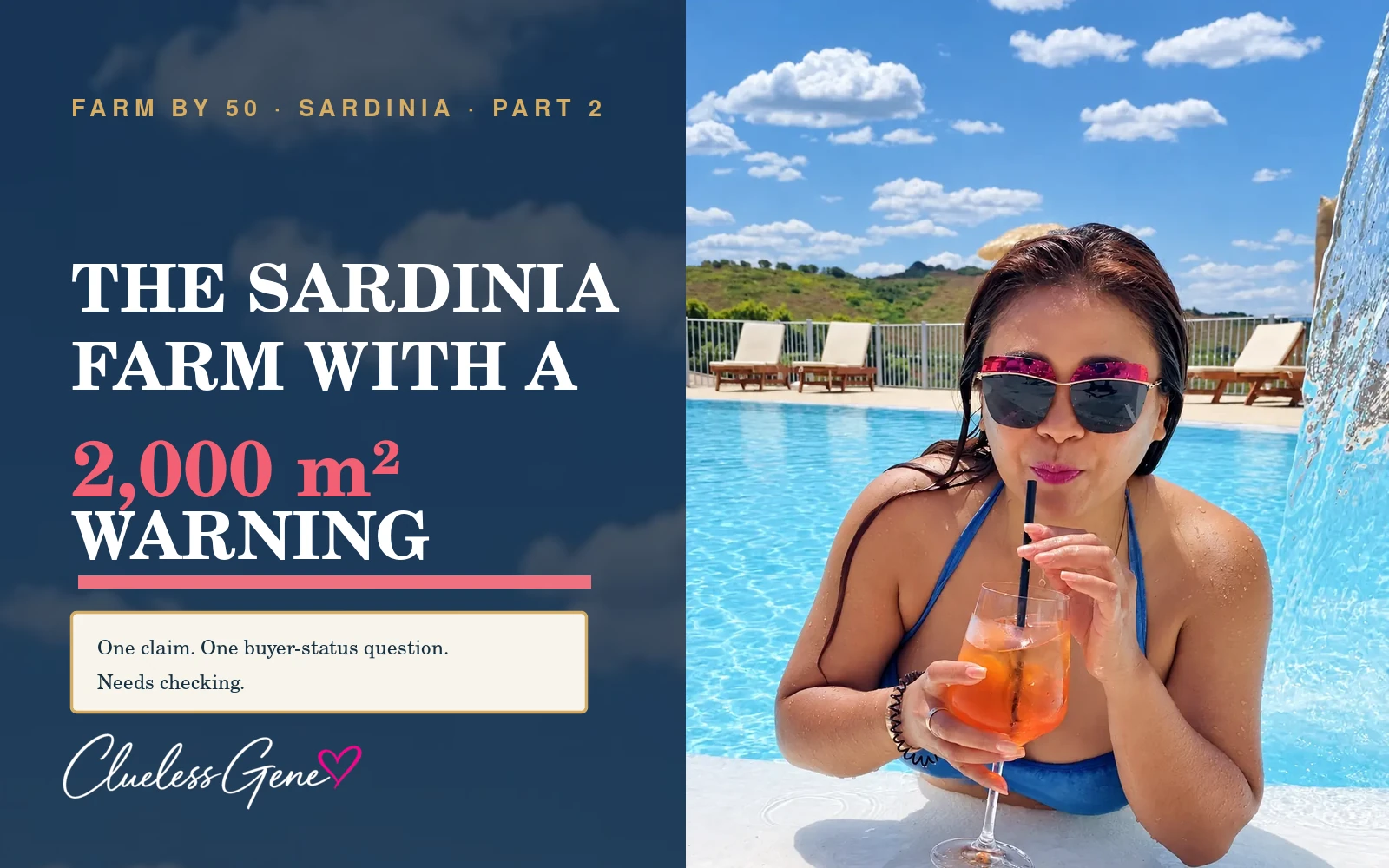
I had found a farm in Sardinia that interested me.
Land, space, potential—exactly the sort of property that keeps Sardinia on my list.
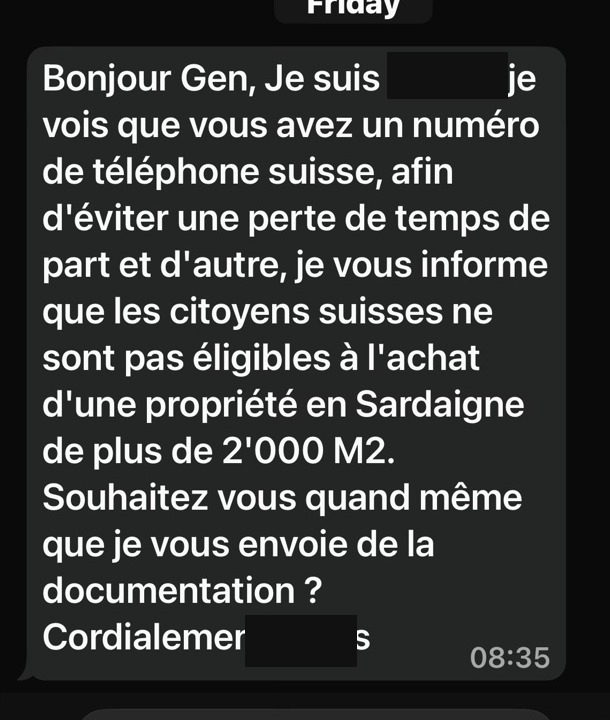
Then the seller noticed my Swiss phone number and made an assumption about me.
He told me that Swiss citizens were not eligible to buy property in Sardinia above 2,000 square metres.
I hadn’t told him my nationality.
He had seen the number and drawn a conclusion.
But the message still caught my attention because, whether the assumption about me was right or wrong, the legal question behind it was worth checking.
Read Part 1: Why Sardinia Is One Place I Still Want to Invest.
My first reaction wasn’t to walk away
This is one of the biggest things I’ve learned from looking at property abroad.
When someone tells me:
“You can’t do that.”
or:
“That’s definitely allowed.”
I don’t automatically believe either one.
I check.
The seller may genuinely believe what he is telling me. He may have encountered another buyer with different circumstances. The rule may apply only to certain people, properties or uses. It may have changed—or it may have been repeated so often that everyone assumes it is correct.
So before deciding that the farm was no longer an option, I started looking into the rule itself.
That’s when I discovered reciprocità
Italy has a legal concept called condizione di reciprocità—the condition of reciprocity.
Very simply, certain civil rights available to a foreign national in Italy can depend on the legal relationship between Italy and that person’s country.
But it isn’t as simple as:
EU = yes. Non-EU = no.
Italy’s Ministry of Foreign Affairs explains that some buyers are exempt from a reciprocity check, including EU and EEA citizens and certain non-EU citizens lawfully resident in Italy with qualifying residence permits. International agreements can also affect the position.
The Ministry provides a country-by-country reciprocity list as a starting point—but it also warns that the information is general guidance and does not itself have legal value.
That is exactly why I would want the answer from an Italian notary for the actual transaction.
The question isn’t just “Can foreigners buy in Italy?”
That question is too broad.
The useful question is:
Can this particular buyer, with this nationality and residence status, buy this specific farm, with this amount and classification of land, for the intended use?
Nationality may matter.
Residence status may matter.
The type of property may matter.
Agricultural land may introduce another set of rules.
The intended use may matter too.
So I don’t want a general internet answer before putting money down.
I want the answer for the actual transaction.
And what about that 2,000 m² rule?
I haven’t found an official Italian source that simply says:
“Swiss citizens may own no more than 2,000 square metres of property in Sardinia.”
That doesn’t automatically mean the seller was wrong.
It means I haven’t found enough evidence to treat his statement as a fact.
Maybe there is a restriction relevant to a particular buyer or transaction. Maybe he was referring to a narrower rule. Maybe it depends on residence status, land classification or intended use. Maybe the information is outdated.
Until the exact transaction is checked by an Italian notary, the claim belongs in my favourite category:
Needs checking.
Not “true”.
Not “false”.
Needs checking.
This is why I like checklists
A property can look completely straightforward until one sentence changes the direction of the whole investigation.
The farm hadn’t become less beautiful.
The land hadn’t moved.
The price hadn’t changed.
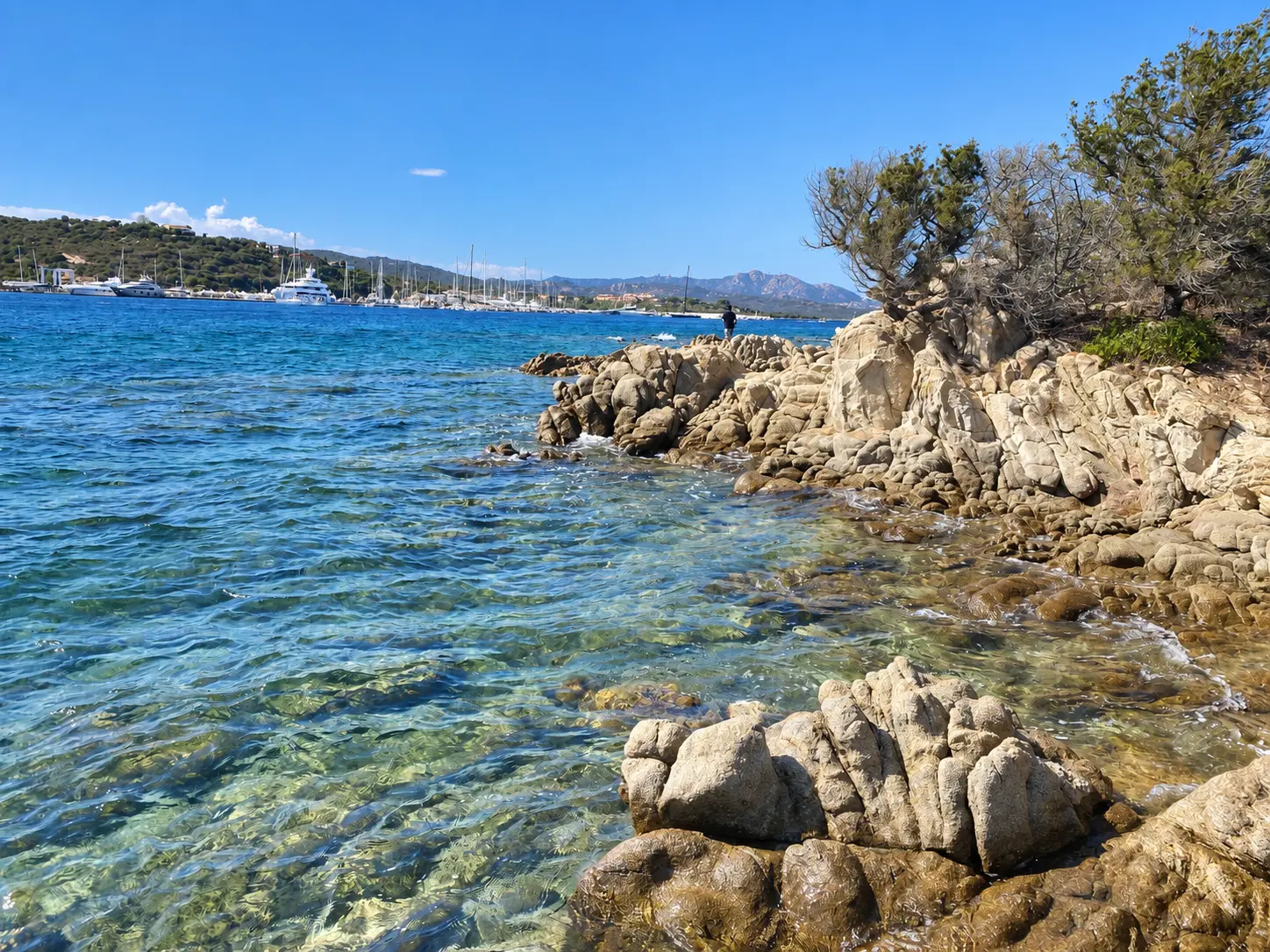
But one piece of information potentially changed whether a particular buyer could purchase it at all.
Before paying a reservation fee or deposit, one of the questions should therefore be:
Does my nationality or residence status create any restriction, authorisation requirement or special condition on my ability to buy this particular property or land?
Italy may give one answer. Spain may give another. Switzerland may give another again.
The property is only half the equation.
Who you are as the buyer can matter too.
That buyer-status question is also built into the decision process behind my Spain Property Buyer Toolkit. The legal rules inside the Toolkit are for Spain—not Italy—but the habit travels well: identify the question, obtain the answer from the right professional and keep the evidence.
Am I still interested in the farm?
Yes.
I’m not abandoning a property because someone mentioned a rule I haven’t verified.
But I’m certainly not ignoring it either.
If the numbers still make sense and the property survives the other checks, the next step is to have the ownership question confirmed properly.
And if it turns out that the transaction isn’t possible for me?
Then I don’t buy it.
That’s not a failed property search.
That’s due diligence doing exactly what it is supposed to do.
He made an assumption about me. I decided not to make an assumption about the law.
Trust. Check. Document.
Continue to Part 3: My Sardinian Neighbour Gave Me One Warning About Buying Property There.
This is my personal property-search experience and research, not legal or tax advice. The Ministry itself describes its country information as general guidance. Nationality, residence status, international agreements and the particular property can affect the answer, so an actual purchase should be checked by an Italian notary and the appropriate professionals.